Imagine dropping the needle on your favorite record—only to realize the sweet details get swallowed up somewhere between your couch and the bookshelf. If you’ve ever felt that your vinyl just isn’t living up to its full potential, believe me, you’re not alone. We all want our records to sound as good as our memories.
Here’s the thing: a bad listening room can turn even the most expensive turntable flat. You might not see the tiny issues, but you sure can hear them. The truth is, creating an amazing setup is part science, part personal touch—and skipping either side often leaves you second-guessing if it’s the room or the system that’s holding you back.
By the end of this guide, you’ll know exactly how to tackle your vinyl listening room setup guide—from picking the right space and gear to dialing in the little details that transform decent into downright magical. Ready to make every record a goosebumps moment? Let’s jump in.
Choosing The Best Room And Positioning For Your Vinyl Setup
Where you set up your vinyl listening room isn’t just about convenience — it’s the decision that shapes every note you hear. Ever wonder why one setup feels alive and another seems dull, even with great gear? Room choice (and layout) is the silent hero behind true analog magic.
Picture this scenario: You move your turntable to a bright, airy living room. The speakers look perfect, but something feels off — the sound keeps bouncing around, muddying the details. Next time, you test a cozier, carpeted spare bedroom, tucking speakers longer along the wall. Instantly, the music gains warmth and definition. That’s the power of environment at work.
💡 Pro Tip: According to the Audio Engineering Society, symmetry in room placement — especially keeping your listening spot centered between walls — helps reduce phase issues and gives you a stable stereo image.
So… how do you choose the right space and find the perfect spot for your setup?
- Check Room Size: Avoid tiny rooms that compress bass and large, echo-prone areas. Medium-sized rooms (12×16 ft or similar) deliver balanced acoustics for most home setups.
- Look For Simple Geometry: Square rooms create odd frequency buildups. Irregular, rectangle-shaped rooms handle sound waves more evenly — making your system sound truer to life.
- Control Surfaces: Hard, bare surfaces (think tile or glass) reflect, while carpets and drapes absorb. Plan to adjust with area rugs, curtains, or bookshelves if needed.
- Mind The Neighbors (And Noise): Placing your room away from busy streets, shared walls, or household hubs means fewer distractions — for you and your records.
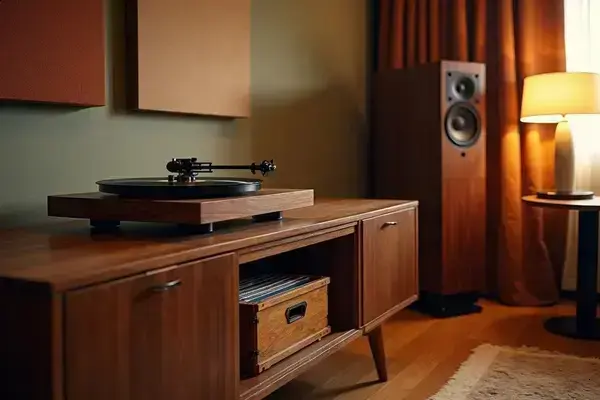
- Speaker & Listener Positioning: Place speakers along the short wall, 2–3 feet from both rear and side walls. Your seat should form an equilateral triangle with the speakers for the most immersive “sweet spot.” Tweak until voices and instruments snap into place.
| Room Type | Typical Pros | Watch Outs |
|---|---|---|
| Living Room | Spacious, furniture provides absorption | Too open, frequent interruptions |
| Bedroom | Carpet, textiles aid sound clarity | Smaller, may need acoustic tweaks |
| Basement | No foot traffic, can custom treat | Humidity, may sound “dead” without rugs/panels |
And honestly? Most home listeners find their ideal spot through a mix of trial, error, and a little side-eye at the advice from professionals like Sound on Sound magazine. No need for perfection — but the right foundation goes a long way.
But there’s one detail most owners completely overlook until it’s too late…
Treating Acoustics: Simple Solutions That Really Make A Difference
Ever settle into your listening chair, drop the needle with anticipation — and then something’s off? Sound either feels harsh or disappears into an echo-laden mess. Here’s the thing: the right acoustic treatment doesn’t require a physics degree or a huge wallet. Small changes can revive your soundstage, making every instrument pop without major renovations.
Let’s break it down. When music plays, sound waves bounce around the room, hitting hard surfaces and reflecting back. Too many reflections? Muddy tone and elusive bass. Too much absorption? Music loses its vibrant energy. From pros at the Acoustic Society of America to vinyl communities worldwide, everyone agrees: the right balance is everything.
💡 Pro Tip: Start with corners — untreated, they trap excess bass. Placing bass traps or even dense bookshelves here evens out your low-end and offers a warm, focused experience.
- Thick Rugs: Cover bare flooring between speakers and your seat. This deadens harsh reflections and tames high frequencies fast.
- Wall Panels: Acoustic foam panels absorb mid and high frequencies where sound first bounces — usually the wall beside each speaker and directly behind your listening position.
- Bookshelves & Soft Furnishings: An uneven wall of records, a filled fabric chair, or curtains on windows naturally break up and absorb waves, acting as budget-friendly diffusers.
- Bass Traps: Designed specifically for corners, these dense blocks control unwieldy bass buildup and are highly recommended by experts at Sound on Sound magazine.
In practice: imagine you’ve set up foam panels beside your speakers, tossed down a heavy rug, and rearranged a packed shelf near the back wall. Suddenly, vocals are clear, bass feels controlled, and—you swear—you’re hearing detail you missed for years.
| Treatment | Best For | Budget Impact |
|---|---|---|
| Acoustic Foam Panels | Mid & High Frequencies | Low |
| Bass Traps | Low-End Clarity | Medium |
| Thick Area Rugs | Floor Reflections | Low |
What actually works might surprise you…
Selecting The Right Gear For Rich Analog Sound
The heart and soul of any vinyl room? Your gear. But, the endless selection of turntables, cartridges, and amplifiers can leave you overwhelmed — and a little lost. What really separates great analog sound from simply “good enough”?
Here’s the truth: the right components work together as a team. Cutting corners on just one piece often means losing out on the nuanced, layered listening that real analog fans crave. The experts at The Absolute Sound magazine constantly stress balance over brand — even more important than chasing the most hyped product of the year.
💡 Pro Tip: Always match your cartridge output and turntable tonearm for compatibility. Even a premium stylus can sound thin through a poorly matched setup!
To make sense of the options, here’s how three popular setups stack up for real-world listeners:
| Component Package | Best For | Pros & Cons |
|---|---|---|
| Budget Starter (Audio-Technica AT-LP60X, Edifier R1280T speakers) | First-timers & small rooms | Easy to use, compact Less detail, can lack deep bass |
| Mid-Range Build (Pro-Ject Debut Carbon EVO, Schiit Mani preamp, Klipsch RP-600M speakers) | Serious music lovers | Rich, dynamic sound Requires separate amp & setup time |
| High-End Experience (Rega Planar 6, Ortofon 2M Bronze, Yamaha A-S1200 amp, Bowers & Wilkins 705 S2 speakers) | Audiophiles & dedicated spaces | Impeccable clarity, huge soundstage Expensive, larger footprint |
In practice: imagine a friend swears his bargain table sounds “plenty good.” The minute you sit him in front of a well-matched mid-tier system — even at the same volume — his eyes widen. That’s what upscaling the right piece (not just the price tag) does in real time.
- Check manufacturer compatibility charts before mixing and matching equipment.
- Don’t overlook clean power (hum and interference kill analog beauty).
- Prioritize a solid turntable stand for stability — it’s worth every penny.
And this is exactly where most people make the most common mistake…
Furniture, Lighting, And Personal Touches For A True Listening Haven
How do you transform a technically sound setup into a space you can’t wait to sink into? It’s not just about the audio gear—it’s the furniture, the lighting, those objects that turn listening into a ritual. The details are what make a good room feel like your haven, where music unfolds and stress disappears.
Start with seating. You want a chair or loveseat that supports you for long sessions, but won’t swallow you whole. Too plush and you’ll lose acoustics; too hard and you’ll never stay long. Look for firm cushions, breathable fabric, and a shape that lets you sit upright at ear level with your speakers—this keeps you in the sound’s “sweet spot.”
💡 Pro Tip: Place low-back chairs a couple of feet from the rear wall. According to the British Audio Society, this greatly reduces unwanted sound reflections and auditory fatigue—especially during marathon listening.
- Lighting: Dimmable floor lamps, soft LED strips behind shelving, or a vintage desk lamp make a world of difference. Avoid harsh overheads; indirect warm lighting creates mood without glare on your records.
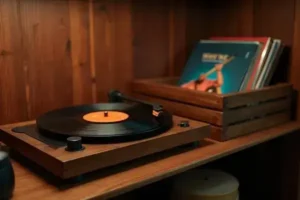
- Storage: Custom record crates, wall-mounted shelves, or modular media consoles prevent stacks from taking over the floor. Easy access means more listening, less clutter.
- Personal Touches: Framed album art, a treasured concert poster, or vintage-brushed hardware—these don’t just look good, they anchor the emotional heart of your space.
Picture this scenario: You finish a tough week, dim your reading lamp, and run your hands over the textured album covers lining your favorite cube shelf. The chair cradles you just right. Every time you settle in, it feels more like a personal retreat—a place that tunes out the world and tunes you in.
| Element | Why It Matters | Top Pick |
|---|---|---|
| Seating | Comfort + correct ear height | Mid-century armchair |
| Lighting | Sets mood, reduces glare | Dimmable floor lamp |
| Storage | Protects records, de-clutters | Vintage wooden crates |
And don’t underestimate the value of that cozy feeling. What actually works might surprise you…
Common Mistakes To Avoid When Building Your Listening Room
You’ve invested in quality gear, dialed in the acoustics, and even curated your own vibe—so what’s left to trip you up? The answer: those easy-to-miss mistakes that even serious vinyl lovers stumble over. Problem is, one small misstep can quietly erode the magic from your sessions.
- Ignoring Vibration: Cheap racks, wobbly tables, or stacked gear can blur your sound. Always use a stable stand and, for turntables, consider dedicated isolation feet. The International Audio Society notes that micro-vibrations rob even high-end systems of detail and depth.
- Overstuffing The Room: Too much furniture, clutter, or giant couches soak up certain frequencies and create weird sonic dead zones. Less is often more—keep only what serves comfort or sound.
- Poor Cable Management: Tangled wires and messy power strips don’t just look bad. They create hum, static, and safety hazards. Bundle loudspeaker and power cables separately, and keep everything neat and accessible.
- Ignoring Room Symmetry: Placing your speakers or chair off-center from the walls throws off the stereo image. Use a tape measure and your ears: adjust until the sound “locks in” front and center.
- Forgetting Ventilation: Long listening sessions plus sensitive electronics and vinyl = hot, stuffy air. Make sure your space breathes—an extra fan or a cracked window goes a long way.
⚠️ Important Warning: Never position your turntable near direct sunlight or heating vents. According to Rega Research, exposure to heat and UV can warp records and damage equipment permanently.
Picture this scenario: You’ve laid out your dream room, but the bass feels muddy and records sometimes skip. A quick check finds your desk lamp’s vibrations rattling through the table, and clutter behind the speakers muffling the sound. You clear the area, move the gear, and—suddenly—the music comes alive with clarity you didn’t know you were missing.
| Mistake | Consequence | Quick Fix |
|---|---|---|
| Stacked Gear | Vibration & heat issues | Use shelf dividers & isolation pads |
| Overloaded Power Strips | Hum, static, fire hazard | Dedicated surge protector |
| Heavy Curtains, No Diffusion | Dull, lifeless sound | Add bookshelf or diffuser panel |
Once this is in place, the rest of the routine falls into place naturally.
Your Listening Space, Unlocked
If you take just one thing from this vinyl listening room setup guide, let it be this: the magic comes from the balance of thoughtful room choices, simple acoustic tweaks, and gear that matches your needs—not just your budget. Add the right furniture, cozy lighting, and avoid sneaky mistakes, and your records will thank you every spin.
Before, maybe vinyl felt hit-or-miss—one album sounds great, the next falls flat. Now, you’re set to create a space that rewards every listen with clarity and warmth. It’s not about perfection. It’s about enjoying more music, more often, with less frustration. You’ve got all the real-world tips you need. Go for it.
What’s the first thing you plan to upgrade or tweak in your own listening room—acoustics, gear, or maybe just a favorite chair? Tell us in the comments below!

Miles Aaron Sutton is a vinyl record enthusiast and turntable collector dedicated to helping music lovers set up, maintain, and grow their vinyl collections. With years of hands-on experience building home listening setups and hunting for records, Miles built Vsomi to be the honest, practical vinyl resource he always wished existed when he was starting out.