Picture this: you drop the needle on your favorite record, ready for that warm, full sound—only to be greeted by crackles and pops that make you wince. It’s frustrating, right? Nothing kills the mood like a beloved album ruined by stubborn dust and grime.
Neglecting your vinyl isn’t just a minor annoyance. Over time, dirt wears down the grooves and can permanently damage what might be a priceless piece of your collection. You might even start to notice tracks skipping or the loss of that rich detail vinyl is famous for. Letting these issues pile up? That’s like watching your investment slowly fade away.
By the time you finish reading, you’ll know the how to clean vinyl records guide inside out: how to get rid of static, avoid common mistakes, and protect your records for years of perfect play. Ready for crystal clear sound again? Here’s the secret to getting there.
Why Clean Vinyl Records Matters More Than You Think
Ever wonder why your favorite vinyl LP sounds a little less magical after a few months on the shelf? It’s not just nostalgia — it’s science. Records collect dust, oils, and even microscopic debris every single time they’re played or handled. These layers dull your sound quality, introduce pops and clicks, and can actually wear down the intricate grooves holding every note.
But is regular cleaning really so essential? Here’s the thing: high-fidelity playback depends on unbroken, undisturbed grooves. Even a thin coat of dust or oily fingerprints can cause your stylus to mistrack, creating distortion and permanent damage. According to the Audio Engineering Society, around 70% of playback issues on vintage vinyl are caused by accumulated contaminants and improper care — not by age alone.
💡 Pro Tip: The Library of Congress recommends dry-brushing your records before and after every play, not just when you notice dirt. It’s the simplest way to protect both the vinyl surface and your stylus.
In practice: imagine cueing up a rare pressing — maybe something from Blue Note or Motown — during a quiet evening. If you’ve skipped even a few quick cleanings, the static and grit don’t just ruin the music; they can actually cause permanent groove wear, meaning the next listen won’t ever sound quite the same again. That’s value lost, memory faded, just from a little neglect.
| Problem | Effect on Record | Long-Term Impact |
|---|---|---|
| Dust & Debris | Clicks, pops, muffled sound | Worn grooves, loss of clarity |
| Fingerprints/Oils | Sticking, stylus jumps | Permanently etched dirt, stylus wear |
| Static Buildup | Attracts more dust | Irretrievable groove damage |
If you think a closed cabinet or anti-static sleeves will do all the work, think again. Records are more fragile than they look. What actually works might surprise you…
Common Myths And Mistakes When Cleaning Records
Ever heard someone say you can clean a vinyl record with Windex or just wipe it down with your T-shirt? These are classic record-cleaning myths that stick around, even as collectors learn the hard way. Truth is, these shortcuts can do more harm than you realize—potentially damaging both the record and your playback setup.
Here’s what you need to know: a quick wipe with the wrong cloth or a bit of tap water might seem harmless, but it can leave behind microscopic scratches and residues. Over time, these tiny abrasions blur the music’s clarity and can attract dust more quickly. The National Recording Preservation Board has documented how home remedies—like wood glue or household disinfectants—can interact chemically with the vinyl, making the surface brittle or causing dulled sound.
⚠️ Important Warning: Never use alcohol-based cleaners on standard records. While pure isopropyl alcohol is sometimes safe for shellac records, it dissolves the protective plasticizers in most vinyl, permanently harming your collection.
- Myth 1: “Any old cloth works.” Actually, you’ll need a true microfiber cloth—others can leave lint, scratches, or even strip grooves of detail.
- Myth 2: “Washing with dish soap is fine.” Many soaps have oils and scents that do nothing but cling to vinyl and clog grooves. Use only specialized record cleaning solutions.
- Myth 3: “It’s okay to air dry.” Letting water evaporate on its own leaves mineral spots and residue, dulling playback and attracting dust.
Picture this scenario: a friend picks up a rare album at a flea market, brings it home, and scrubs away with bathroom tissue. The noise on first play? Twice as bad as before—now with skip points that never existed. This is a story you’ll hear again and again from frustrated beginners.
| Mistake | Short-Term Result | Long-Term Risk |
|---|---|---|
| Paper towels for drying | Visible lint left behind | Permanent surface scratches |
| Alcohol-based cleaners | Faster initial shine | Damaged plasticizers, brittle vinyl |
| Tap water rinse | Quick dust removal | Mineral deposits, cloudy sound |
And this is exactly where most people make the most common mistake…
How To Prepare Your Space And Materials Safely
Before you even think about cleaning your vinyl, ask yourself: is your workspace really set up to keep records safe from new dust, scratches, and static? Many collectors skip this step—then wonder why their freshly cleaned LP crackles again after just one spin. Starting off right pays for itself in sound quality and peace of mind.
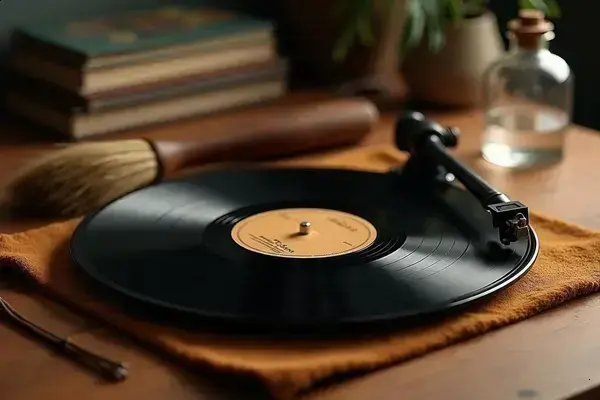
Here’s what an ideal setup looks like. Choose a flat, stable surface that’s large enough for your record to fully rest without overhanging. You’ll want to clean away any grit, crumbs, or debris first. Direct sunlight or drafts? Not your friends—those cause static or quick drying, which can leave residue or warp the vinyl. A well-lit, room-temperature area away from pets and food is perfect.
- Soft, static-free cleaning mat (felt or rubber, not towels or bare wood)
- Distilled water in a spray bottle (never tap water)
- Record cleaning solution (from a reputable brand or recipe approved by the Vinyl Institute)
- Professional record brush (carbon fiber preferred) and a separate microfiber cloth just for drying
- Nitrile gloves to avoid skin oils or lotions transferring to the grooves
💡 Pro Tip: Always wash and dry your hands before handling any LP—even if you’ll use gloves. According to the Vinyl Alliance, clean hands and tools are the first line of defense against new contamination.
- Clear your workspace and lay out your cleaning items within easy reach.
- Place your record on the mat; make sure it doesn’t wobble or touch hard surfaces.
- Only use one record at a time—stacking risks pressure warping and cross-contamination.
- Keep your solution and cloths labeled and stored separately from household cleaners or dusters.
- Plan for drying: have a clean rack or lint-free drying area set aside, away from ventilation.
In practice: picture this scenario—a collector rushes the prep, leaves the kitchen window open, and tiny pollen grains settle onto the cleaned LP within minutes. All that work, gone in a gust of wind. What actually works might surprise you…
Step-By-Step Guide To Cleaning Vinyl Records
Ever stare at a filthy record and think, “Is there actually a right way to fix this?” Here’s the truth—yes, and it matters. Cleaning a vinyl LP isn’t just about wiping away surface dust; it’s a deliberate process that preserves sound quality and prolongs the life of your collection.
- 1 anti-static record brush (carbon fiber preferred)
- Distilled water
- Specialized vinyl record cleaning solution
- 2 microfiber cloths (one for wet, one for dry)
- Soft felt cleaning mat
- Gloves (nitrile, powder-free)
- Drying rack or clean, lint-free space
💡 Pro Tip: According to the Vinyl Alliance, always store your LPs vertically after cleaning—they’ll warp over time if stacked, especially when drying.
- Dry Brush: Place the record on a felt mat. Use the anti-static brush to gently sweep the surface in a circular motion, following the grooves.
- Apply Solution: Lightly mist the cleaning solution (or a 50/50 mix of distilled water and isopropyl alcohol if manufacturer-approved) directly onto a clean microfiber cloth, not the record.
- Wipe Gently: With the dampened cloth, wipe the record in slow, concentric circles. Don’t press hard—let the fibers do the work.
- Rinse (Optional for Heavy Dirt): If the LP is very dirty, carefully use a second cloth lightly dampened with distilled water to remove any leftover residue.
- Dry Thoroughly: Pat the record dry with a fresh microfiber cloth. Prop upright in a dust-free rack for at least 30 minutes.
- Repeat for Both Sides: Flip and perform the process again. Never stack multiple wet records together.
In practice: picture this scenario—a collector spends an afternoon prepping his jazz collection for a new turntable. He invests in a Pro-Ject Spin-Clean, follows each step, and at the end, the hiss and pops are gone, revealing warmth and detail he’s never heard before. That’s when cleaning feels like magic.
| Step | Tool | Why It Matters |
|---|---|---|
| Brushing | Anti-static brush | Removes dust before deeper cleaning |
| Solution wipe | Microfiber cloth + cleaner | Breaks down oils and grime |
| Rinsing | Distilled water | Leaves no chemical residue |
| Drying | Clean microfiber | Prevents water spots, mold |
But there’s one detail most owners completely overlook until it’s too late…
Best Long-Term Storage And Maintenance Tips
When you’ve put in the effort to clean your vinyl records, it’s tempting to just slide them back on the shelf and call it a day. But here’s the reality: proper storage and routine maintenance make the difference between a record that lasts decades and one that deteriorates in a few years. The good news? You don’t need expensive gear—just smart habits and a little vigilance.
Let’s start with storage. Records should always be kept vertically, never leaned at an angle or stacked; gravity and pressure warp discs over time. Use high-quality inner sleeves, preferably anti-static polyethylene or rice paper, and sturdy outer jackets—both are available from reputable brands like Mobile Fidelity Sound Lab and Diskeeper. Temperature matters, too: the Library of Congress recommends 65–70°F and 45–50% relative humidity for archival storage.
- Keep records out of direct sunlight and away from radiators or vents—UV and heat are top culprits for warping.
- Dust shelves regularly to prevent contamination.
- Inspect for mold or mildew, especially in basements or humid climates.
- Wash hands before handling records and avoid touching grooves.
- If you move, transport records snugly in sturdy boxes designed for LPs, never loose or in garbage bags.
💡 Pro Tip: Use a silica gel pack in every storage box—these inexpensive packets absorb excess moisture and dramatically reduce mold risk on both sleeves and records.
| Storage Method | Protects Against | Level of Effort |
|---|---|---|
| Polyethylene inner sleeve | Static, dust | Low |
| Vertical shelving | Warping, pressure damage | Medium |
| Climate control | Mold, heat warp | High |
In practice: picture this scenario—a collector is gifted a rare ‘70s pressing that sat for years on a sunlit shelf. The cover is beautiful, but the record? Warped and noisy, almost unplayable. A little maintenance would have saved it; now, that music is lost forever. The right habits in place now make everything easier from here.
Your Vinyl Records, Sounding Better
If you take just one thing from this how to clean vinyl records guide, let it be: clean records don’t just sound better—they last longer and truly reward the music lover. The right prep, real cleaning steps, and smart storage make all the difference.
Before, you might have worried about pops, crackles, or accidentally ruining a collector’s gem. Now? You know how to keep every LP you love crisp, clear, and playing for years. It’s simple steps, not fancy gear, that change everything. You’ve got real know-how on your side.
What’s your best vinyl care habit, or where do you still get stuck? Share your favorite tip—or your biggest LP disaster story—in the comments. Let’s help each other level up!

Miles Aaron Sutton is a vinyl record enthusiast and turntable collector dedicated to helping music lovers set up, maintain, and grow their vinyl collections. With years of hands-on experience building home listening setups and hunting for records, Miles built Vsomi to be the honest, practical vinyl resource he always wished existed when he was starting out.